

Introduction
“I am confident that humanity’s survival depends on all of our willingness to comprehend feelingly the way nature works.” — Buckminster Fuller
Modern psychology is in crisis. Vague theories lacking universal relevance and studies that can’t be replicated leave the field struggling to provide adequate support and true healing for the millions of people facing mental health issues (1).
The root of the problem is paradigmatic. The field of psychology has evolved in parallel with a reductionist, scientific materialist view of reality in which helping professionals are chasing individual symptoms as if they are independent phenomena, rather than parts of a larger system. This myopic approach misses the forest for the trees. Neuroscience alone cannot map the mysterious but massive influence of spirit and soul.
Meanwhile, many “holistic” practitioners rely too heavily on single-source theories, operating on the assumption that gut-health or sugar or glyphosate is the root cause of all conditions, physical and mental, regardless of any scientific data or lack thereof (2).
In this context, there is strong need for a scientifically-valid modality inclusive of the full spectrum of human experience — soma, soul, psyche and spirit. To survive and thrive, humanity requires a system of inner and outer pattern recognition rooted in the understanding that human hearts and minds are intimately interwoven within the web of all beings.
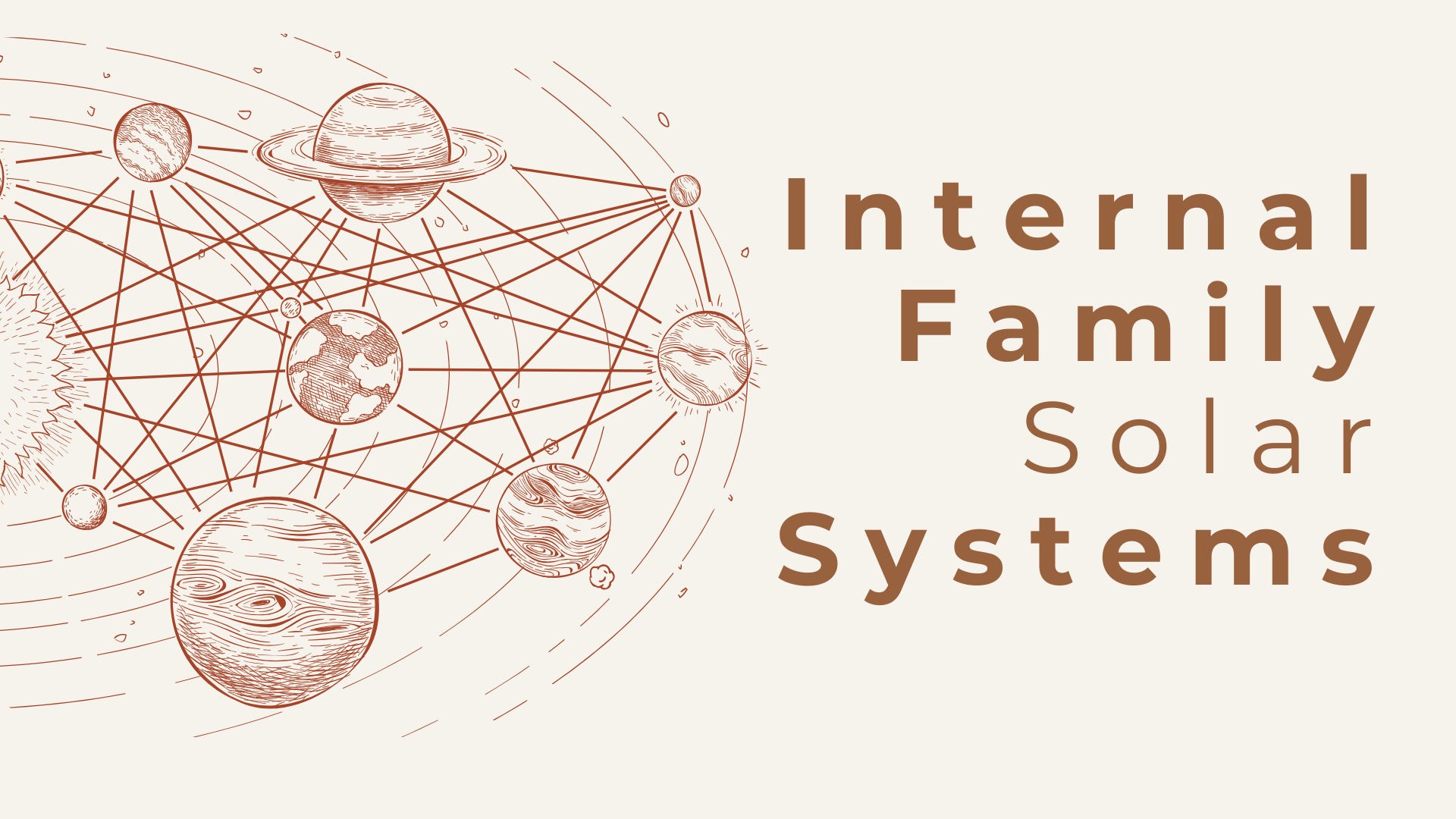
Internal Family Solar Systems (IFSS) synthesizes the evidence-based psychotherapeutic framework of Internal Family Systems (IFS) with the mythopoetic map of Vedic Astrology (Jyotish) to provide a comprehensive clinical modality for Self-healing and spiritual counseling.
By conceptualizing the mind as a tensegrity system reflecting the structure of the solar system, individuals can map their internal planetary “parts,” lighten psychological burdens, and lead their lives from their authentic Self.
To effectively support this thesis, this dissertation explores three primary points of intersection between physics, clinical psychology, and Vedic Astrology:
1. The Psyche as a Tensegrity System
First, the paper illuminates the geometry of consciousness through the lens of Buckminster Fuller’s definition of tensegrity, wherein a system is stabilized by continuous tension and discontinuous compression.
The IFS model is founded on the assertion that the whole of the human psyche is naturally composed of distinct parts, echoing the tensegrity aphorism of “islands of compression floating in a sea of compression,” in which you cannot change one thing without changing everything.
Because the mind operates as a tensegrity system, a shift in one internal relationship instantaneously alters the entire psychological structure.
2. Vedic Astrology as the Map of the Internal Cosmos
Second, this research demonstrates how Jyotish serves as an archetypal map of the psyche. Jyotish proposes a fractal reality wherein celestial bodies are precisely mirrored within the human mind and body.
By evaluating an individual’s astrological chart, the IFSS practitioner can accurately anticipate how distinct planetary parts might take on healthy, protective or extreme roles in the internal system and subsequently propose appropriate remedies.
3. The IFSS Clinical Methodology
Third, the dissertation describes the clinical application of IFSS as a tool for Self-healing and spiritual counseling. IFSS provides a structured protocol for using Jyotish to enhance and accelerate the process of unblending merged parts, unburdening exiled pain and cultivating healthy Self-to-part relationships.
When the central Self is empowered to serve as the center of gravity of the internal system, planetary parts are relieved of their extreme roles and can return to their natural orbit.
Relevance
The relevance of this topic lies in its capacity to translate the intangible stuff of soul and psyche into tangible experience and practical applications of a living wisdom. IFSS provides an accurate map to help navigate the ethereal territory of psycho-spiritual evolution.
Through this process of internal harmonization, individuals can step into a more authentic expression of who they truly are, and find their true place of belonging within the web of all beings.
Read Chapter 02:

Citations:
Hutmacher F, Franz DJ. Approaching psychology's current crises by exploring the vagueness of psychological concepts: Recommendations for advancing the discipline. Am Psychol. 2025 Feb-Mar;80(2):220-231. doi: 10.1037/amp0001300. Epub 2024 Jan 25. PMID: 38271030.
Beres, Derek. ""Good Energy" Has Very Bad Data." Re:Frame Substack, 25 Oct. 2024, derekberes.substack.com/p/good-energy-has-very-bad-data. Accessed 28 Feb. 2026.