

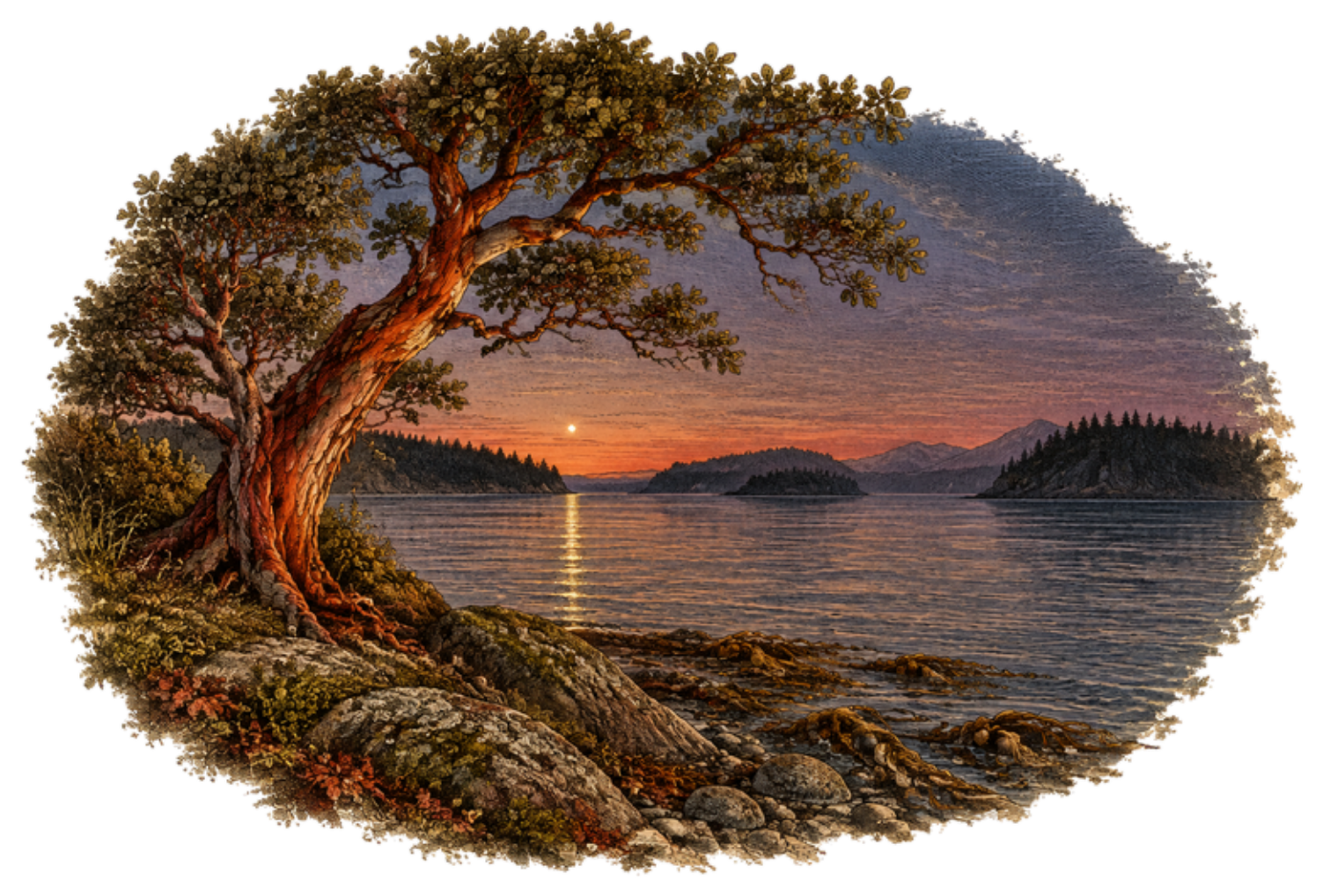
All spring and summer she hung in the west after sunset, the brightest light in the sky.
Then, in August, she began to sink. Each evening a little lower, a little closer to where the Sun had gone down, until one night in late September she simply wasn’t there. She has been out of sight ever since.
Tonight, Friday, October 23, at 8:44 pm Pacific, Venus passes directly between the Earth and the Sun. Astronomers call it inferior conjunction. It is the closest Venus ever comes to us, about 40 million kilometres, and it happens exactly when we can’t see her at all.
Nearest when hidden. Hold onto that.
NOTE: the last time Venus made this descent through the same stretch of sky was October and November 2018. Look back at your journals and calendar from that time, remember what you were going through to explore the way your personal history rhymes with the present moment.
The oldest version of this story
Nearly four thousand years ago, Sumerian scribes were copying a poem about this. It begins:
From the Great Above she opened her ear to the Great Below.
In Sumerian, the word for ear also means wisdom. Inanna, Queen of Heaven, goddess of love and war, and the planet Venus, turns her listening downward. The poem never quite says why.
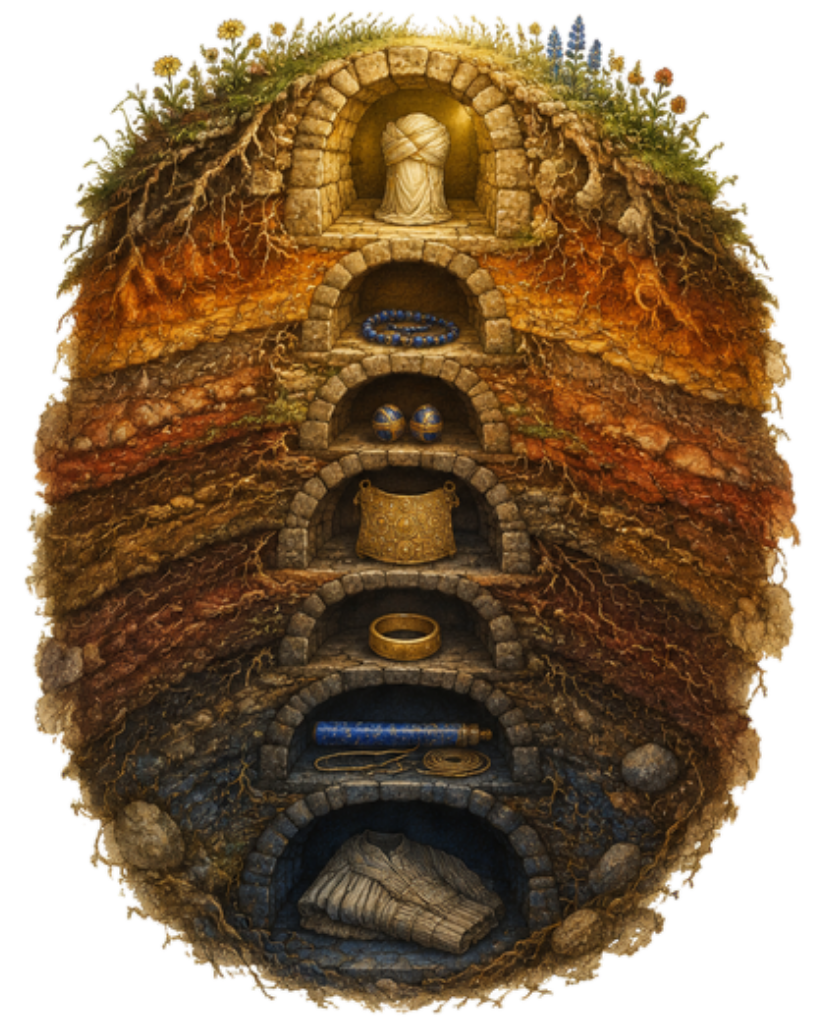
She leaves her seven heavenly temples. She dresses in her seven powers: a crown, beads at her throat and on her breast, a breastplate called “Come, man, come,” a gold ring, a measuring rod and line, and the royal robe. And before she goes, she does something wise. She tells her loyal minister, Ninshubur, exactly what to do once she has gone below.
At the gate of the underworld, the gatekeeper asks who she is. “I am Inanna,” she answers, “going to the east.”
Her sister Ereshkigal, queen of the dead, orders the seven gates opened one at a time. At the first gate, the crown is taken. Inanna asks what is happening and hears: “Quiet, Inanna, the ways of the underworld are perfect. They may not be questioned.”
At the next gate, she is stripped of her beads. Then the breastplate. The ring. And the measuring rod. At the seventh gate, the robe. She enters the throne room naked and bowed low.
The judges of the underworld fasten the eye of death on her. She becomes a corpse, and the corpse is hung on a hook.
Three days and three nights.
The star behind the story
Inanna is a mythologicaly representation of the planet Venus. The oldest written records from her city of Uruk, about five thousand years old, already name a morning Inanna and an evening Inanna.
Babylonian skywatchers logged Venus’s risings and settings for twenty-one years, and the first entry on their famous Venus tablet says, more or less: on the fifteenth day of the eleventh month, Venus disappeared in the west, stayed out of the sky three days, and on the eighteenth day appeared in the east.
Gone in the west. Three days. Arising in the east. “I am Inanna, going to the east.”
Scholars still argue about how much of the poem the planet explains. It is also a poem about death, about the limits of power, about grief. It’s not one or the other; it’s all of it. For the ancient poets, their goddess was a light they watched sink into the sunset and rise again before dawn. The sky gives shape to the story. The story gives significance to the sky.
Half a continent away, Jyotish encodes a similar understanding. In Vedic Astrology Venus is Shukra, “guru to the demons,” and of all the planets only Shukra holds the esoteric knowledge of bringing the dead back to life.
Robert Svoboda makes the direct link in Light on Life: “Venus dies and is reborn in many cultures, including the Sumerian (where her name is Inanna).” The Sanskrit word for a planet emerging from the Sun’s glare is udaya. Rising.
This year’s descent is especially poignant. Tonight Venus meets the Sun in Chitra, the nakshatra of the celestial architect, whose impulse, in Komilla Sutton’s words, is “to cut away the layers that hide our true self.”
Seven gates, seven layers. On November 5 she retrogrades into Virgo, the sign of her debilitation, her fallen state, and on November 13 turns direct just shy of her lowest point. All the way down to the floor of the underworld, and then the turn.
The descent to soul
Bill Plotkin, who founded the Animas Valley Institute where I’ve trained as a Wild Mind Guide since 2018, writes that the spiritual life runs in two directions. Spirit is the ascent: the rising sun, the east. Soul is the descent: the setting sun, the west, “as in the apparent destination of the sun as it sinks below the western horizon.”
That’s the evening star’s whole path, written as a map of the psyche.
Plotkin holds Inanna up as the model of a descent you choose, set beside Persephone, who is snatched. “Will you descend purposely to the underworld like Inanna or Beowulf,” he asks in Soulcraft, “or will you wait to be abducted like Persephone?”
In The Journey of Soul Initiation he pictures her “progressively stripped of her seven layers of raiment” and names the stage Dissolution: “both a free fall and a fall to freedom.”
Most of us don’t choose it, at least not at first. The call and the crisis arrive together. A role ends. A relationship ends. The old map no longer reflects the ground shifting beneath your feet.
Seven gates
Here is how I read the garments: they are the parts we play.
The crown is authority, the title on the door. The beads are how we are heard and how we are seen. The breastplate called “Come, man, come” is our power to draw people in. The ring is what we own and what we’ve bound ourselves to. The measuring rod is our judgements. The robe is status itself, the ego identity, the last skin.
None of them is bad or wrong. Each one is a real power, and each one served her. The gatekeeper never says she was wrong to wear them, but she doesn’t need them anymore. The underworld has its own ways.
Stripped of her raiments, the story says she becomes but a corpse, hung on a hook. This is the raw material that will be reanimated, revitalized, revived.
Who stays above, and who goes below
Three days pass, and Ninshubur does exactly as she was told. She goes to the gods. The first two refuse: she wanted to know the underworld, they say, so this is her problem. You may recognize that voice — internally or among friends and family — when you’ve taken a risk and it’s all falling apart.
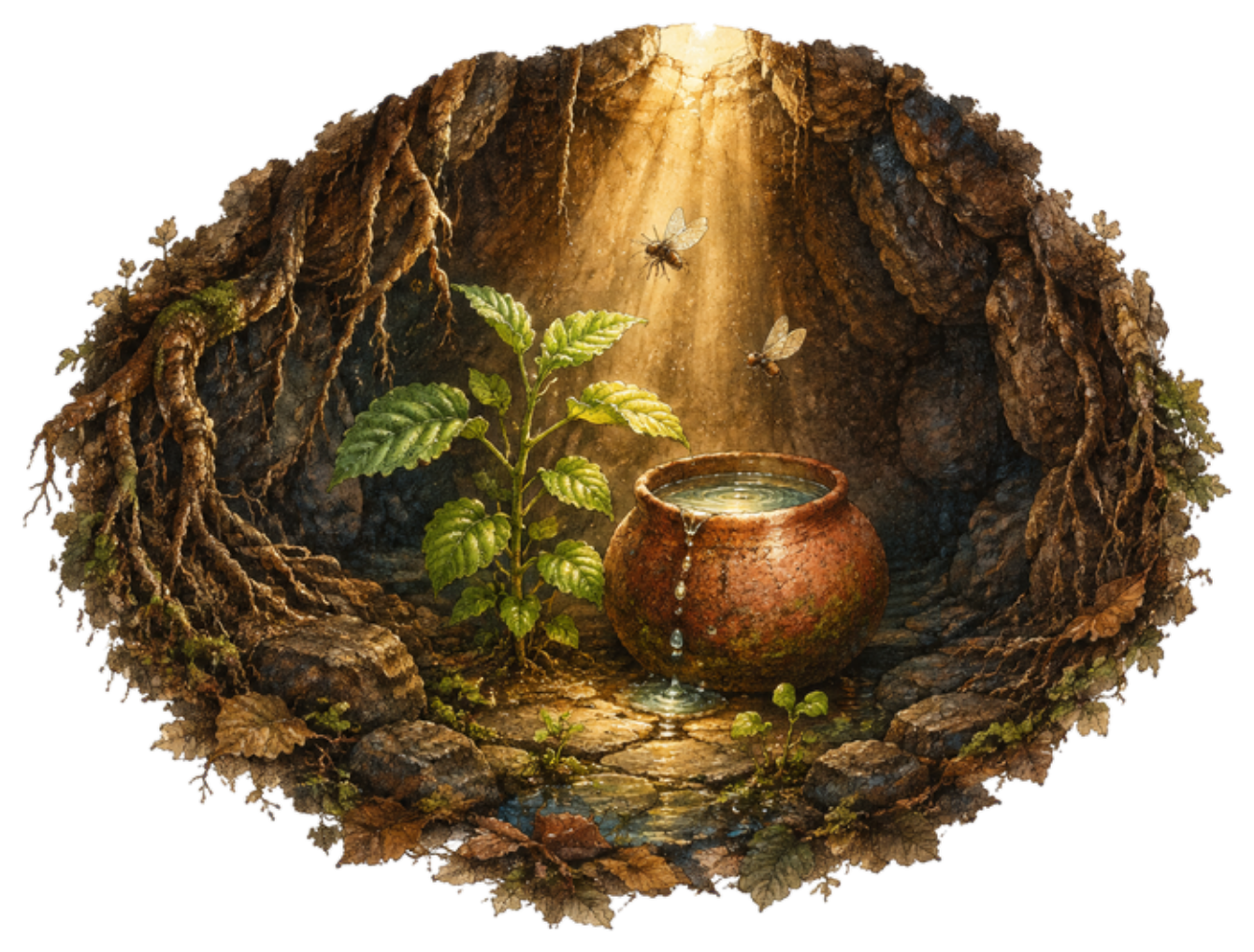
The third, Enki, god of wisdom and fresh water, scrapes the dirt from under his fingernails and makes two tiny beings. He sends them below with the food and water of life.
They find Ereshkigal (Inanna’s sister, Queen of the Dead) alone, groaning like a woman in labour. They don’t fight her. They don’t try to fix her. When she cries, “Oh my heart,” they answer, “You are troubled, our mistress, oh your heart.” When she cries, “Oh my body,” they answer, “You are troubled, our mistress, oh your body.”
That’s the medicine.
For the first time in the whole poem, someone feels with the queen of the dead. Moved, she offers them a river full of water and a field full of grain. They ask only for the corpse on the hook. They sprinkle it with the water of life, and Inanna rises.
In the Internal Family Systems model, building on Richard Schwartz’s work, we’d call Ereshkigal an exile: a part carrying old grief, alone, out of sight, ferocious when approached but fundamentally vulnerable.
And we’d recognise the two small mourners as Self energy: curious, compassionate, humble enough to slip under the door like flies. The Jungian analyst Sylvia Brinton Perera saw this decades ago. Healing doesn’t come from grandiose heroics. It comes from the simple act of being witnessed.
The price, and the rhythm
Nobody leaves the underworld unchanged. Demons follow Inanna up to collect a substitute. She won’t hand over Ninshubur (her loyal minister), or the others who are grieving for her. Then she finds her husband, Dumuzi, sitting on a throne, at ease in his finest clothes. Not mourning. Not even a little.
Men, am I right?
She gives him the same eye of death the judges gave her.
It’s a hard moment, and I don’t want to tidy it up. Every descent carries a cost. Not every part of us survives the underworld journey. Often, and in this case, it is the part of us that kept performing while we were gone.
And so Dumuzi, the protector part (pretending, perhaps, to be) unmoved by the whole ordeal is reassigned a new role. This is not punishment, but reorientation to a new rhythm, shown by his sister, Geshtinanna, choosing to share his underworld duties, each of them spending half the year below.
No bad parts, even at the bottom of the world.
For the next three weeks
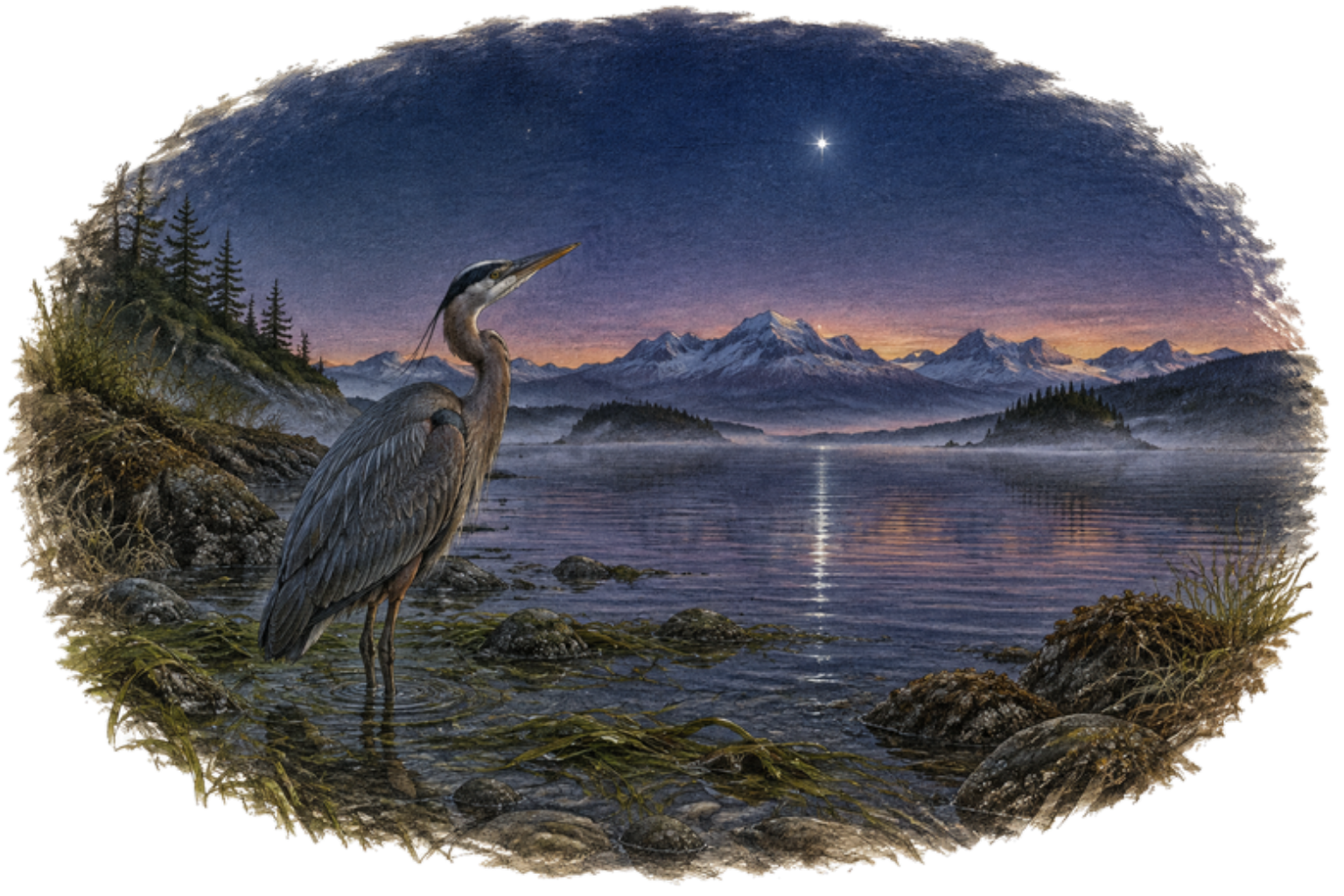
Venus stays retrograde until November 13. Here is a way to walk with her.
Name your seven garments. Write down seven roles or powers you wear. Read the list slowly and notice which one already feels loose. You don’t have to take anything off. Just notice.
Choose your Ninshubur. Tell one person what you’re moving through and what to do if you go quiet. Every descent needs someone above ground.
Be the mourner. When a part of you groans this week, try echoing it instead of fixing it. “Oh, your heart.” See what loosens.
Watch for her return. In about a week, from around October 30, step outside in the hour before sunrise and look low in the east-southeast. She’ll be a little higher and brighter each morning. Udaya.
If a descent is pulling harder than you can hold, steady first. Call your person. Reach for a guide or a counsellor. In Canada or the US, you can call or text 988 any time.
Inanna came back. So does Venus, every 584 days, for as long as anyone has been looking up. So, I believe, do you.
Happy trails. See you in the Underworld.
Telfer
P.S. If you’re in the middle of your own descent and want a map for it, the free Ecotone Assessment takes five minutes and names the terrain you’re in. And PHASE SHIFT, my lunar newsletter, follows Venus home on November 4.
Credits (for the end of the post): Opening line and gate refrain from Diane Wolkstein and Samuel Noah Kramer, Inanna, Queen of Heaven and Earth (1983); “going to the east” and the mourners’ words from the Oxford ETCSL translation (1.4.1). Venus tablet: Reiner and Pingree (1975). Bill Plotkin, Soulcraft (2003) and The Journey of Soul Initiation (2021). Robert Svoboda and Hart de Fouw, Light on Life. Komilla Sutton, Essentials of Vedic Astrology. Sylvia Brinton Perera, Descent to the Goddess (1981). IFS is Richard Schwartz’s model.